


Automatic Garden Hose Assembly and Packaging Line

Project name:
Garden Hose Assembly

Location:
Clinceni, Romania

Date:
April 28, 2023

Project Type:
Assembly
Intro:
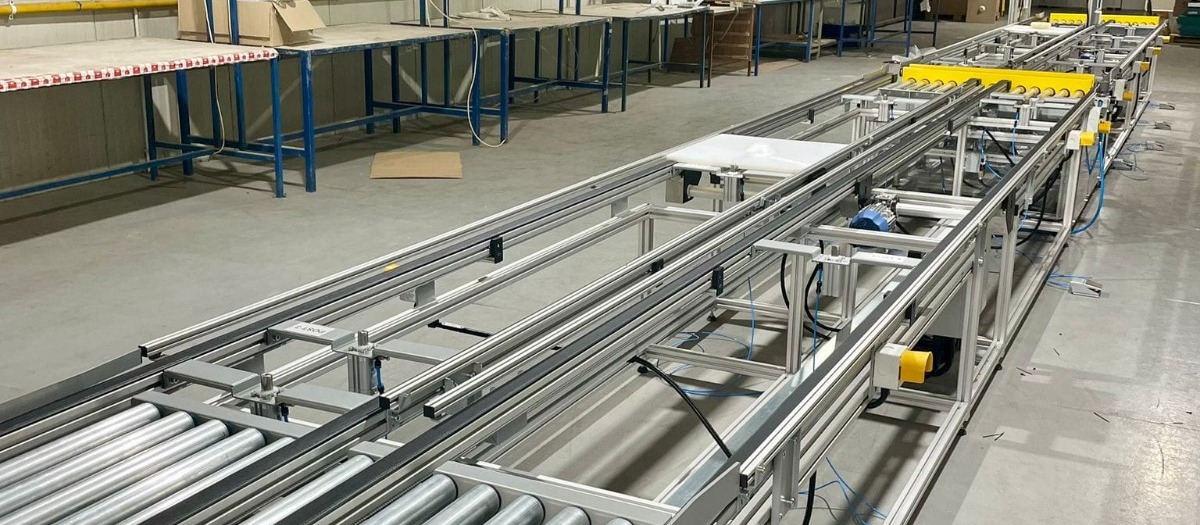
The system is installed in a production hall, where a main conveyor transports plastic pallets holding the work-in-progress components. As the product moves along the line, it passes through multiple workstations, each equipped with dedicated tools for assembling different parts of the final product.
.jpeg)
General Overview
The line is divided into two independent sections, allowing simultaneous processes with different durations.
After completing an operation, the operator places the part on the plastic pallet and presses the Start button. The pallet automatically moves to the next station, but only after sensors confirm its presence and a stopper lifts to hold it precisely in place — preventing uncontrolled movement or premature transfer to the next station.
If two operators work on the same section, the system waits for confirmation from both to ensure the part is fully assembled before proceeding.
Each workstation includes:
- an individual Start button,
- an emergency mushroom button,
- capacitive sensors for precise pallet detection,
- pneumatic stoppers to securely fix the pallet in place.
The conveyor forms a closed rectangular loop: the pallet starts at Position 1, passes through all workstations, and is finally picked up by the unloading operator and placed onto the shipping pallet.
.jpeg)
Our Social Channels


Have a project in mind?
Professional electricians ensuring your safety first.
Automation and Control
The entire line is controlled by an industrial PLC, which manages:
- transport logic and synchronization,
- signals and sensors,
- solenoid valves, stoppers, and safety devices,
- communication with the assembly robot.
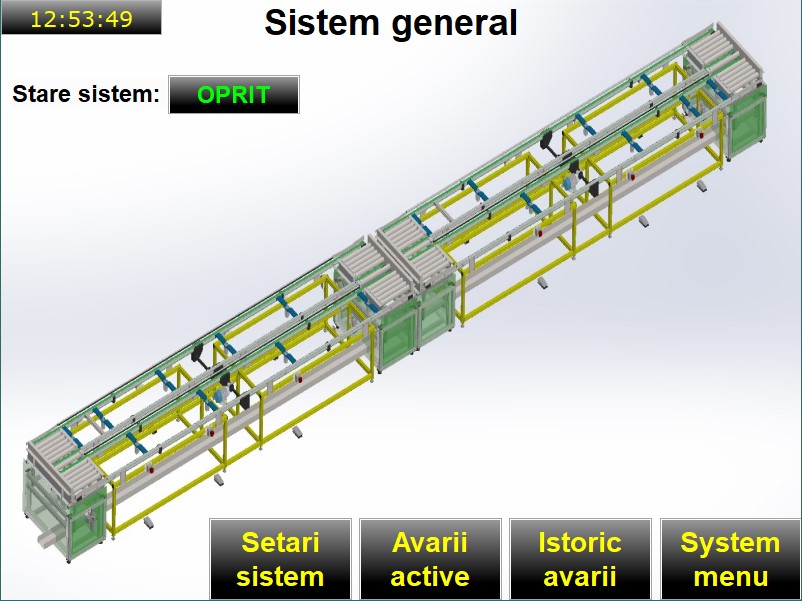
We fully designed and implemented the electrical and software systems — including the control panel, wiring diagrams, cabling, PLC program, and HMI interface.The line is integrated with a robot dedicated to assembling the hose retractable spring, ensuring higher productivity and superior precision.
Intuitive HMI Interface
Through the main HMI, operators can:
- set conveyor speeds,
- switch between automatic mode (timed transfer) and manual mode (direct button control),
- monitor system status, alarms, and faults,
- manually operate solenoid valves and stoppers for testing and maintenance,
- adjust parameters according to product type or process requirements.
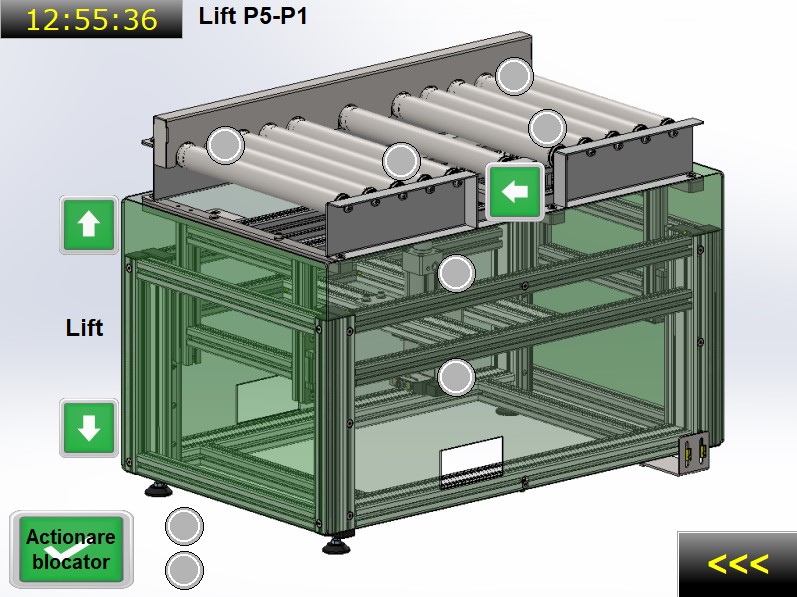
Additionally, operators can make real-time adjustments and fine-tune the process to accommodate different product types, optimize workflow, and maintain uninterrupted, high-efficiency production.
Benefits and Results:
- Fully automated and synchronized production flow
- Precise pallet positioning with automatic locking system
- Reduced human errors and waiting times
- Full control and real-time feedback via HMI
- Robot integration for automated assembly operations
- Enhanced safety through emergency buttons and control sensors
.jpg)


%20(1).jpg)


.jpg)



Pages
Phone Numbers


Location

Strada Constantin Moise Nr.11